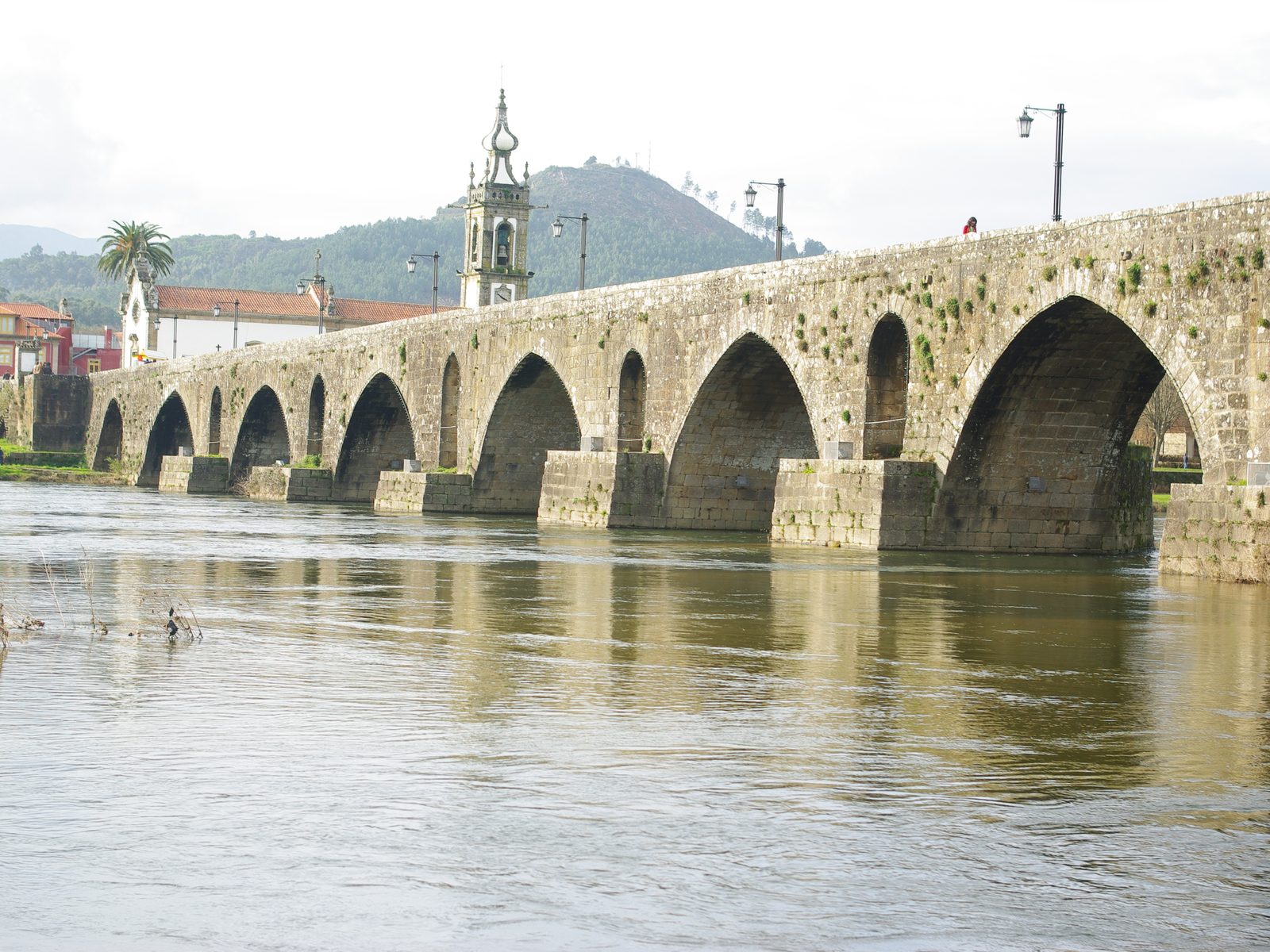
Sit down, this one has a river in it. Around 137 BC, a Roman army reaches the bank of a river in the north-west of the Iberian Peninsula. The water is clear, the country is lovely, the far bank is only a few metres away. And the soldiers won’t cross.
Because this river, they’d heard, was the Lethe — the river of forgetting, the one the souls of the dead drank from in Greek myth to forget their lives. Whoever crossed it would forget their family, their homeland, the way back. They’d stay on the other side for ever, not knowing who they were.
The river was the Lima.
The general
The general was called Decimus Junius Brutus, and he had come to finish the job Rome had left half-done.
Viriathus had died not long before, murdered by his own friends. But the west of the Peninsula was still full of armed bands doing what he had done: strike and vanish into the hills. Brutus quickly saw that chasing them was pointless. Appian, the Greek historian who tells us this, says he found the job difficult, shameful to leave undone, and not very glorious to finish.
So he changed strategy. Instead of chasing the fighters, he went for their villages. Burn their homes, and they’d have to come back to defend them.
And while we’re on the subject: Brutus was also the man who gave land and a town to Viriathus’s old soldiers — presumably so they’d stop fighting. He called it Valentia. Most historians think it’s today’s Valencia, in Spain — others have suggested other places, but they’re in the minority.
Almost all of Lusitania surrendered to Brutus. Almost. When Brutus’s envoys went to a town called Cinginnia to propose that its people buy their peace, they were told that the townspeople’s ancestors had left them iron to defend the town, not gold to buy their freedom from a greedy general. The man who tells the story is Valerius Maximus, a Roman. And he adds, a little sheepishly: better that men of our own blood had said it than heard it.
The river
Brutus crossed the Douro, fighting his way north, and reached the Lima. Appian says he was the first Roman even to think of crossing it.
The army stopped. Nobody wanted to be the first to forget home.
What Brutus did is in Livy, in two lines: he snatched the standard from the standard-bearer’s hands and carried it across the river himself. The soldiers, seeing their general on the other side — alive, in one piece and looking like a man who remembered everything — followed him.
Now, honesty: there’s a prettier version, the one they tell in Ponte de Lima. In it, Brutus crosses alone and, from the far bank, calls each soldier by name, one by one, to prove he hasn’t forgotten any of them. It’s a perfect image. But it isn’t in any ancient text — not in Livy, Florus, Appian or Plutarch. What the sources give us is the standard. And that’s enough.
Florus, another Roman, adds that Brutus only turned back after watching the sun sink into the sea, “not without a certain dread of impiety”. Strabo, a Greek geographer, is drier: he says the Minho was the limit of the campaign.
Where the fear came from
The Romans didn’t invent the legend on their own. Strabo, who was writing more than a century later, reports what people said: that an army of Celtici and Turduli had crossed that river, fallen out, lost their leader and scattered — and the men ended up much further north, beyond the Minho, near the cape we now call Finisterre, never going home. As if they had forgotten.
But some see it the other way round. The archaeologist Jorge de Alarcão thinks the name is older than the legend — that it comes from a local word, older than the Romans, which Greeks and Romans heard as “Lethe”. Pliny, for his part, had already said the river had “many legends” attached to it. And Alarcão allows for a less poetic explanation: the soldiers may simply have been worn out by the campaign, or thought it risky to go further with peoples behind them who had been beaten in battle but not in the war. The fear of forgetting may have come later, to explain it.
And after the Lima, another river
After the Lima, Brutus reached yet another river, which Appian calls the Nimis. That was where the Bracari lived. And they weren’t the sort to sit and wait.
Appian says Brutus attacked them because they had raided his supply train. And he describes them in one of the starkest lines in the whole account: they were a very warlike people, and the women took up arms alongside the men. They fought without ever turning their backs, without ever letting out a cry.
When they lost, it got worse. Of the women who were captured, some killed themselves. Others killed their own children with their own hands, believing death was better than captivity.
That isn’t on the tourist signs. But it’s the other side of the river.
Talabriga
There’s one more Brutus story that says a lot about the Roman way of winning.
There was a town called Talabriga that kept surrendering to Rome, rebelling, surrendering again. Nobody knows for sure where it was: Pliny places a Talabrica south of the Vouga, and some archaeologists look for it in Águeda; Jorge de Alarcão points out that an inscription naming a woman “from Talabriga” turned up at Estorãos — right here, in Ponte de Lima.
When Brutus arrived, the townspeople begged forgiveness and gave themselves up unconditionally. Brutus demanded everything: the deserters, the prisoners, the weapons and hostages. Then he ordered everyone out of the town — men, women and children — surrounded them with his army and made a speech listing every one of their betrayals. The Talabrigans waited for the worst.
And then Brutus stopped talking, kept their horses, their food and the town’s money, and let them go home.
Fear first, then mercy. Rome had learned.
What was left
Brutus returned to Rome victorious and went down in history with a nickname: Callaicus — conqueror of the Callaeci, the people of the north-west.
And he kept one odd habit. Romans honoured their dead in February; Brutus did it in December. Plutarch, puzzled by the custom, points out that this was the Brutus who had crossed the Lethe. Cicero gives a more prosaic reason: Brutus counted December as the last month of the year. But it’s hard not to think that the man who crossed the river of forgetting made a point of not forgetting his own.
The Bracari were beaten, but they didn’t disappear. More than a century later, when the emperor Augustus wanted to found a new city in the heart of their land, he named it after them: Bracara Augusta.
Today it’s called Braga.
The river that made you forget turned out to be the river nobody forgot.