Sit down, this one starts badly. The year is 150 BC, in the west of the Iberian Peninsula. The Romans have spent decades trying to bring to heel a hill people they call the Lusitanians. The Roman governor, Servius Sulpicius Galba, makes them an offer: if they want to be friends of Rome, he’ll give them good land to farm.
Many Lusitanians believe him. They come down from the hills with their families. Galba splits them into three groups, shows each group a plain and tells them to wait there. Then he goes to the first group and asks them, as friends, to hand over their weapons. When they do, he surrounds them with a ditch and sends in soldiers with swords. The Lusitanians die crying out to their gods. Galba does the same to the second group and the third, before they can find out what happened to the first.
Very few escaped. One of them was called Viriathus.
Even Appian, a historian on the Roman side, wrote that Galba paid back treachery with treachery — the Lusitanians had broken a treaty — but did it in the barbarians’ manner, in a way unworthy of a Roman. Galba was taken to court in Rome. Livy tells us how he got off: seeing he was about to be condemned, he hugged his two little sons and the orphan in his care and spoke so pitifully that the case was dropped. The Lusitanians who survived were sold as slaves in Gaul. Viriathus never forgot Galba.
The shepherd
Everything we know about Viriathus comes from his enemies. And even they liked him.
Diodorus, a Greek, says he had been a shepherd in the hills since childhood, used to eating little, working hard and sleeping no more than he had to. He always went armed. He spoke plainly and said what he thought. And Diodorus wrote a line you could put on a wall: for Viriathus, the greatest wealth was self-restraint, and freedom was his homeland.
The same Diodorus tells the story of his wedding. His father-in-law, a rich man called Astolpas, laid out gold and silver cups and fine carpets. Viriathus stayed on his feet, leaning on his spear, looking at it all with contempt.
And there was some talk at the table. Diodorus’s text has come down to us in two different summaries, and each kept a different part.
In the first, Viriathus asks his father-in-law a question:
- Viriathus: the Romans have seen all this wealth at your feasts. Why have they never taken it, when they could?
- Astolpas: plenty of Romans saw it, but none of them thought to take it, or even to ask for it.
- Viriathus: then why did you leave the people who let you enjoy your goods in peace, to join me — a poor man with no name?
Put plainly — and the reading is ours: with the Romans, Astolpas’s gold was safe. By giving his daughter to Viriathus, he had gone over to the side of a man with nothing to lose.
In the second, Viriathus talks about ingratitude and the folly of trusting to luck, and tells his father-in-law two things: that all those riches could belong to whoever carried them off on the point of a spear; and that it was the father-in-law who ought to thank him, because Viriathus, “lord of everything”, hadn’t asked him for a thing.
Here too the reading is ours: the father-in-law’s gold was only still there because Viriathus allowed it. If anyone was doing a favour, it was him.
Then he refused to sit down, however much they begged. He gave his men bread and meat, barely tasted anything, sent for his bride, made a sacrifice in the Iberian manner, put her on his horse and rode back to the hills.
The trick
Two years after the massacre, the Lusitanians who had escaped numbered ten thousand and were raiding again. The praetor Gaius Vetilius cornered them somewhere with no way out. They sent envoys with olive branches, asking for land to live on. Vetilius gave his word. The deal was nearly done.
That was when Viriathus stood up and reminded them of Galba.
They made him their leader on the spot. He drew the army up in battle order, as if to fight, and gave one order: when he mounted his horse, everyone was to run, each by a different road, and meet at the town of Tribola. Only a thousand horsemen would stay with him.
Viriathus mounted. The army vanished in every direction. Vetilius turned on the only group he could see, the thousand horsemen, and Viriathus kept him busy for two whole days — strike, fall back, strike again. When he reckoned the others were safe, he slipped away by night along paths the Romans didn’t know.
Eight years
Vetilius followed him to Tribola and rode into an ambush in a thicket. Vetilius himself was taken alive — and the man who caught him, not knowing who he was, saw only a fat old man, decided he wasn’t worth anything, and killed him.
Eight years followed that Rome would rather forget. Eight, says Appian; the Latin writers count fourteen and Diodorus eleven — but they all agree it was far too long. Viriathus didn’t fight Roman-style battles. He appeared, struck, pretended to flee, came back. The praetor Gaius Plautius, after a thrashing on a hill covered in olive trees, shut himself up in winter quarters — in the middle of summer.
And Viriathus made sure it showed. He set up the robes and rods of office he took from Roman magistrates on the hills, as trophies. Florus, a Roman, wrote that if fortune had been on his side he would have been “the Romulus of Spain”.
His soldiers came from different tribes, and in eight years there was never a mutiny. Appian explains why: Viriathus was always first into danger and, when it came to sharing the spoils, he never took the biggest share, even when his friends insisted. He gave it to the bravest.
In 140 BC, the consul Servilianus was besieging Erisana, one of Viriathus’s towns. Viriathus slipped in by night and, at dawn, fell on the Romans digging the siege trenches and drove the Roman army into ravines with no way out. He could have destroyed it. He didn’t: he preferred to end the war. He let the Romans go in exchange for a treaty, and Rome ratified it. Viriathus officially became amicus populi Romani, a friend of the Roman people, and his men kept the land they held.
A Lusitanian shepherd had made Rome sign a peace.
And now the part nobody tells you at school
Rome couldn’t stomach the shame. The next consul, Quintus Servilius Caepio — brother of the man who had signed the peace — wrote home that the treaty was unworthy of the Roman people. Letter by letter, he got his war back.
Viriathus sent three of his most trusted friends to negotiate peace with Caepio: Audax, Ditalcus and Minurus. Caepio showered them with gifts and promises. He bought them.
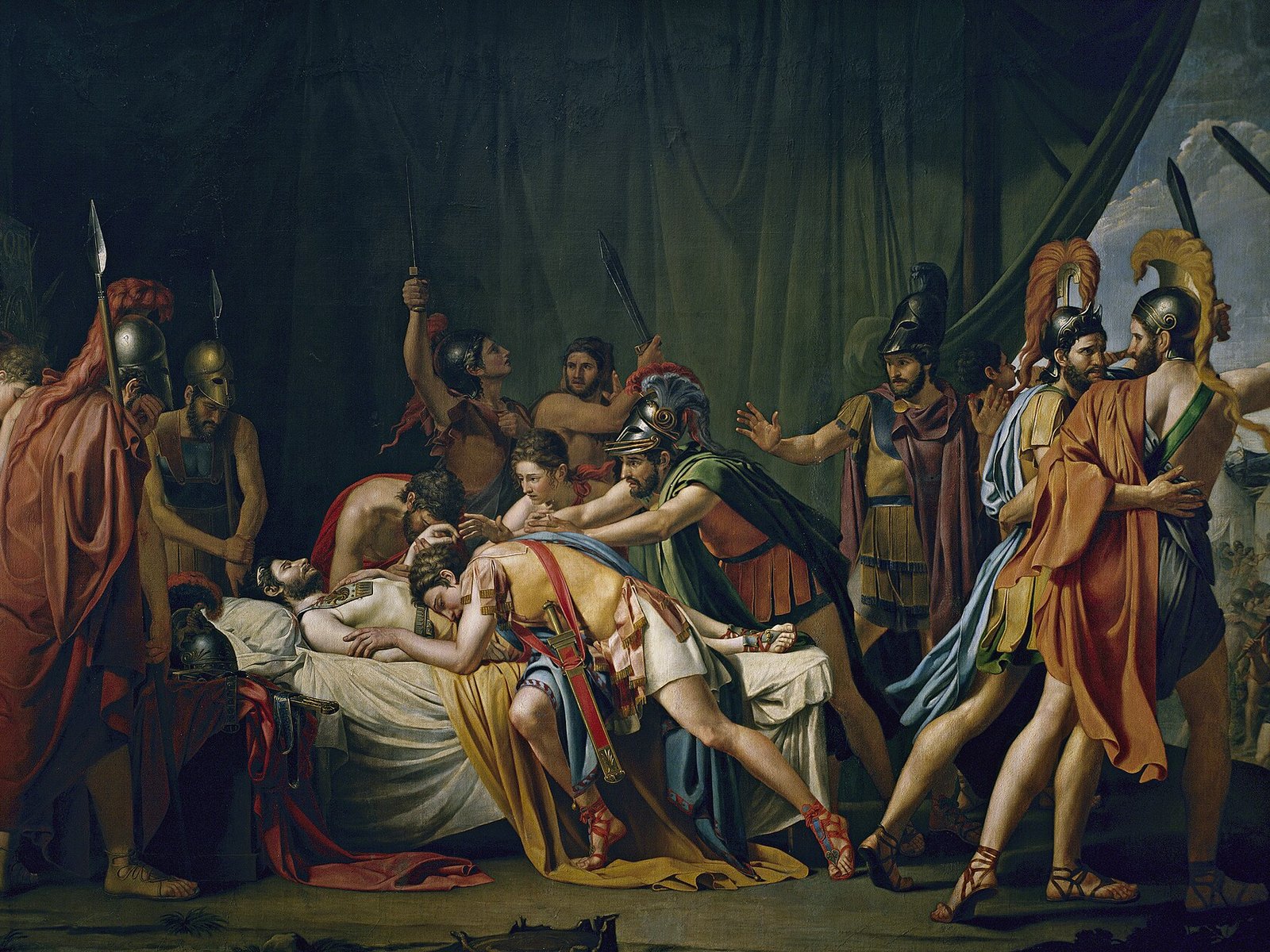
Viriathus slept little and nearly always in his armour, so as to be ready at any hour — which is why his friends were allowed into his tent at night. The three walked in, as if bringing urgent news, just after he had fallen asleep. They stabbed him in the throat, the only part his armour didn’t cover. The wound was so small that nobody noticed anything.
In the morning his men were surprised their chief was sleeping so late. When they went in, they found him dead, still in his armour.
The three were already in Caepio’s camp, asking for the rest of their pay. Caepio told them to keep what they had already received. The rest they could go and ask Rome for.
And this is where the most famous line in the story comes from:
Rome does not pay traitors.
Now, honesty: no ancient text has this line. The answer Appian records is the “go and ask Rome” one. Eutropius, in the 4th century, comes closer: when the killers asked for their reward, the answer was that Rome had never liked generals being killed by their own soldiers. And Orosius, in the 5th century, says it was the only thing the Romans did bravely in the whole affair: they judged the killers unworthy of a reward. The short, perfect version was polished centuries later.
And Rome didn’t come out of it well either. Valerius Maximus, a Roman of Tiberius’s time, wrote that Viriathus’s death involved a double treachery: the friends who killed him and the consul who ordered it. And he summed it up: Caepio didn’t earn his victory. He bought it.
The funeral
The Lusitanians burned him on a towering pyre. Horsemen and foot soldiers, fully armed, marched around the fire singing of his deeds until the last flame died. Then there were combats at his tomb — Diodorus says two hundred pairs of warriors.
His successor, Tantalus, didn’t last long and surrendered. Viriathus’s war ended there. Lusitania itself wasn’t tamed yet.
So why is this episode zero?
Because Viriathus wasn’t Portuguese. There was no Portugal and no Portuguese, and the Lusitania of that time isn’t today’s Portugal — nor did it have fixed borders.
But there are stories a country chooses to tell itself. Many centuries later, when Portugal needed a hero from before the beginning, it reached for the shepherd for whom freedom was a homeland, who said no to Rome and could only be beaten by betrayal. It’s the plot you’ll see on this site again and again: a small place that would rather be its own.
We didn’t even exist yet, and we already had the story.