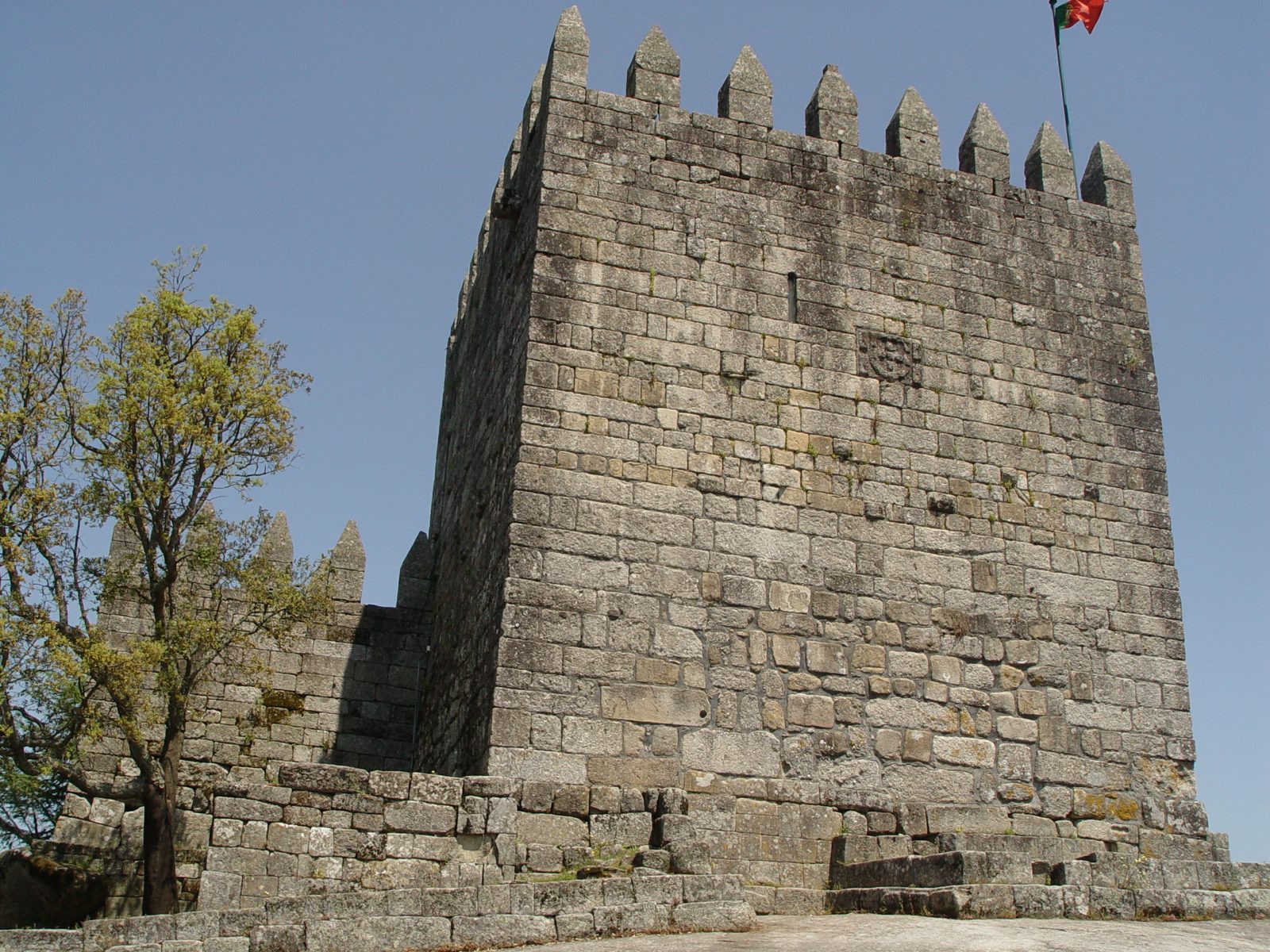
Sit down, this one’s good. Summer of 1128, a field outside Guimarães called São Mamede. On one side, a woman of nearly fifty with a handful of knights. On the other, a boy of nineteen with about the same. She’s the mother. He’s the son. And what’s at stake is whether Portugal is going to exist — though neither of them knew that’s what they were deciding.
The mother was called Teresa and she was not someone you messed with. Daughter of the king of León and Castile, widow of a French count called Henry who’d been given this strip of land between the Minho and the Mondego as a wedding gift. She’d been running it alone for sixteen years. She signed documents as “queen” without anyone ever giving her the title, which tells you everything about her. The trouble was she’d fallen for — or allied with, same thing back then — a Galician count, and the local nobles started watching every job go to his friends.
The son was called Afonso. He’d grown up away from his mother, raised by a lord from the Douro called Egas Moniz, among nobles who didn’t like where this was going at all. At sixteen he walked into the cathedral at Zamora and knighted himself, because there was nobody around with the rank to do it. That gives you an idea of the boy.
The battle itself? Not much is known. It was short. But by the end of the day the mother had lost.
The same rock, twice. First the sister, then the son. This family.
And now the part nobody tells you at school. Tradition says he had his mother locked up in the castle of Lanhoso, twenty kilometres away. If so, Teresa knew the cell well: seven years earlier, in 1121, she’d been besieged on that same rock — by her sister, Queen Urraca of León, who made her sign a treaty to get out.
Now, honesty: the sister’s siege is documented. The son’s is tradition — no paper from the time confirms it, and the historians shrug. Teresa turns up soon after in exile in Galicia, where she died two years later. But anyone who stands on that rock today and looks out over the Ave valley understands why the story stuck.
The boy kept the land. He’d run off his own mother so that the county wouldn’t be swallowed by the neighbours to the north. And he wasn’t yet twenty.
Fifty years waiting for a name
Beating his mother was the easy part. He spent the next fifty years fighting on three fronts at once: his cousin the king of León to the north, the Moors to the south, and the Pope in Rome, the only man who could turn a stubborn count into a real king.
In 1139 he beat the Moors at Ourique, somewhere in the Alentejo, in a battle about which little is known and much was invented — centuries later, that’s where they had Christ appear to him before the fight. From then on he called himself king. Nobody had given him the title. He just used it.
In 1143, at Zamora, his cousin recognised him — he needed peace for other wars. And Afonso did something clever: he declared himself a direct vassal of the Pope, paying a yearly tribute. If he was Rome’s vassal, he couldn’t be León’s.
Rome took its time. Thirty-six years. Only in 1179 did Pope Alexander III recognise Afonso as king and Portugal as a kingdom. Afonso was seventy, lame from a leg broken in battle, and had meanwhile taken Lisbon from the Moors with the help of a crusader fleet that was on its way to the Holy Land and agreed to a detour. He died six years later, in Coimbra. He had founded a country by refusing to give up.
So why didn’t it just become Spain?
It’s the question every foreigner asks and few Portuguese can answer. Galicia was the same and got absorbed. León was bigger and got absorbed. Aragon, Navarre, Granada — all ended up under one crown. Portugal was the only exception on the whole peninsula.
There’s no single answer. Geography helped: the Minho to the north and the sea to the west make natural borders, and Castile was too busy in the south. Luck helped: Afonso lived to nearly eighty in an age when kings died young, and gave the country time to get into the habit of existing. The Church helped, with the vassal-of-Rome trick.
But there’s a part that maps and papal bulls don’t explain. Very early on, there were people who decided they’d rather be small and their own than part of something bigger. In 1385, when the crown was heading to Castile by marriage, it was the people of Lisbon who rose up and picked another king. In 1640, after sixty years of union with Spain, it happened again. Three times history offered Portugal a merger with its neighbour, and three times the answer was the same.
São Mamede was the first.